Introduction
You can have the best-designed wine list in the world. With carefully selected wines, well-thought-out prices, and an impeccable structure. But if your floor team doesn't recommend wine, that list doesn't sell.
The reality is that in most restaurants, floor staff don't actively suggest wine. Not because they don't want to, but because they don't feel prepared, don't have the tools, or don't know where to start.
In this article we analyze why this happens and, above all, what conditions make the floor team recommend wine naturally and effectively.
Why they often don't recommend
Lack of time
In a service with 40 diners and 3 waiters, there's no time to stop and talk about wine. Service moves fast, tables are waiting, and wine recommendation is perceived as an extra that doesn't always fit the rhythm.
Insecurity
Wine intimidates. Many waiters feel they don't know enough to recommend without looking foolish. And they're right to feel that way if nobody has trained them or given them tools to do it well.
Lack of incentive
If selling more wine doesn't translate into any form of recognition, the waiter has no reason to make the extra effort. Recommendation requires energy, and that energy needs fuel.
Disconnection from the product
If the waiter has never tasted the wines on the list, they cannot recommend with conviction. Recommendation without experience is script reading — and the customer notices.
What makes a waiter recommend
1. Having tasted the wine
This is the most powerful factor. A waiter who has tasted a wine can say "I really like this one" with authenticity. And authenticity sells more than technique.
How to implement it:
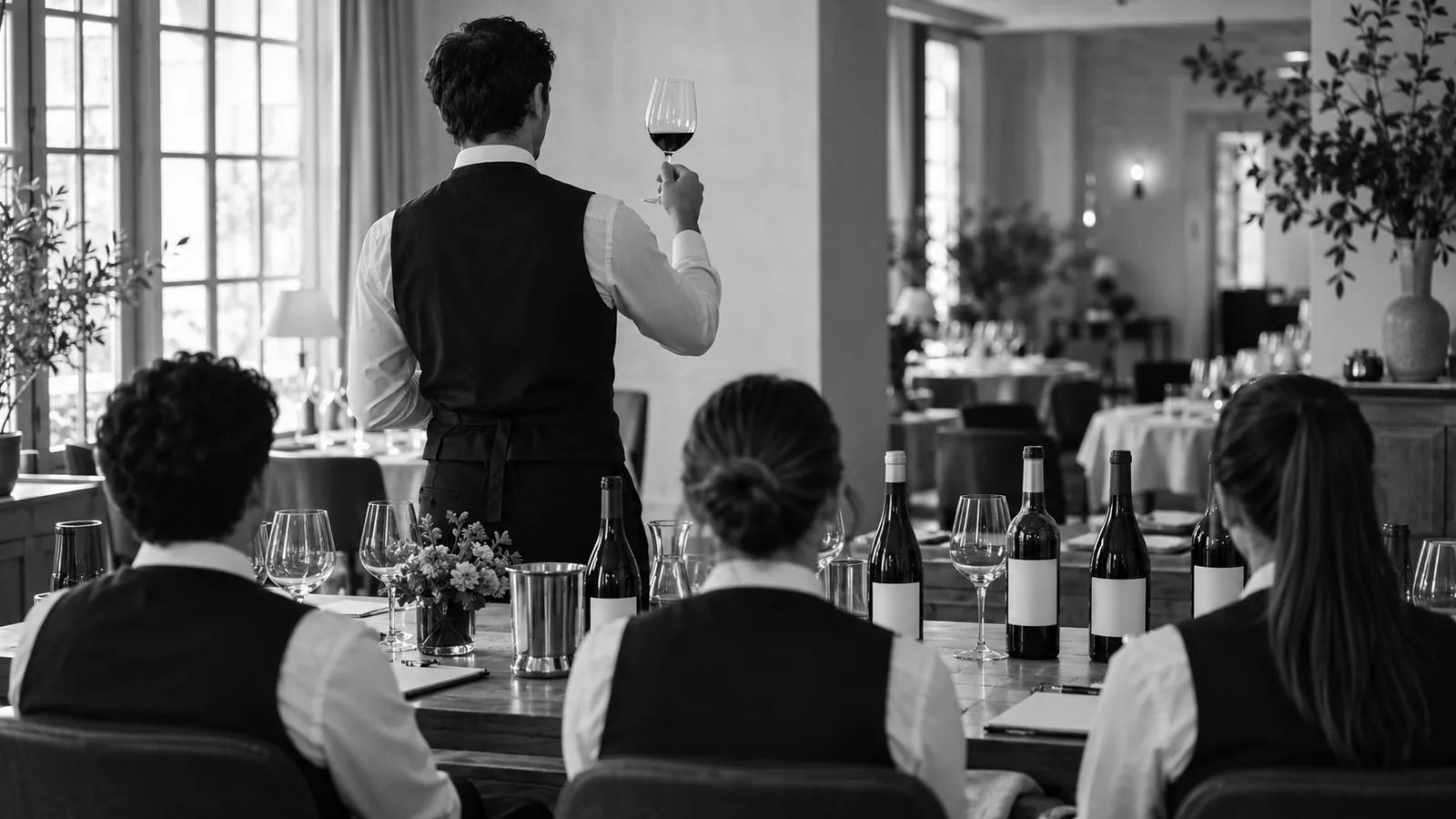
- Monthly mini-tasting with 3-4 wines from the list.
- Service tasting: open a bottle during briefing and let everyone try it.
- Let the team choose "their" wine: the one they feel most comfortable recommending.
2. Having a simple script
You don't need a speech. You need a sentence. Something like: "If you like red, I'd recommend this [wine], which goes great with the [dish]. It's one of our favorites."
Key:
- 10 seconds maximum.
- No jargon.
- One specific dish pairing.
- Personal touch ("our favorite", "what I'd choose").
3. Having management support
If the manager promotes wine recommendation, the team does it. If they don't, nobody will. Recommendation culture starts at the top.
Actions:
- Mention wine in every pre-service briefing.
- Recognize waiters who sell more wine.
- Share sales data: "This week we sold X glasses more than last week."
4. Having a manageable list
A list with 100 references overwhelms anyone. A list with 40 well-selected wines allows the waiter to know the product and recommend with confidence.
5. Having data
If the waiter knows that wine X sells well with dish Y, they have a solid argument. If they also know it has good margin, they feel they're contributing to the business.
How to facilitate wine sales on the floor
Simplify the list
Fewer references, better selected. A list of 40-50 well-chosen wines sells better than one with 100 where nobody knows what to recommend.
Give the team confidence
Don't ask them to be sommeliers. Ask them to recommend what they like and give them the tools to do it. Authenticity sells more than technique.
Use visual support
A digital wine list with descriptions, label photos, and suggested pairings is a sales tool for the waiter, not just for the diner. They can check it in a second and make a well-founded suggestion.
Create recommendation routines
In the pre-service briefing, choose 2-3 wines of the day that the whole team can recommend. That way they always have something prepared, without needing to improvise.
Celebrate sales
When a waiter recommends a wine and the customer reorders or compliments it, recognize it. Motivation is built with small visible successes.
The checklist: does your restaurant have what it takes?
| Factor | Yes | No |
|---|---|---|
| Team tastes wines regularly | ||
| There is a simple recommendation script | ||
| Management promotes wine recommendation | ||
| The list has fewer than 50 references | ||
| There is real-time sales data | ||
| Good recommendations are recognized |
If more than 2 boxes are in "No", start there.
Conclusion
Making staff recommend wine is not a training issue. It's a system issue. If you give your team tasting, tools, support, and recognition, recommendation happens naturally.
And when it happens, the impact is immediate: more wine sold, higher average spend, better customer experience, and a team that feels more professional.
With Winerim, you can give your floor team the data and tools they need to recommend with confidence. From real-time sales insights to simple pairing suggestions. Request a demo.