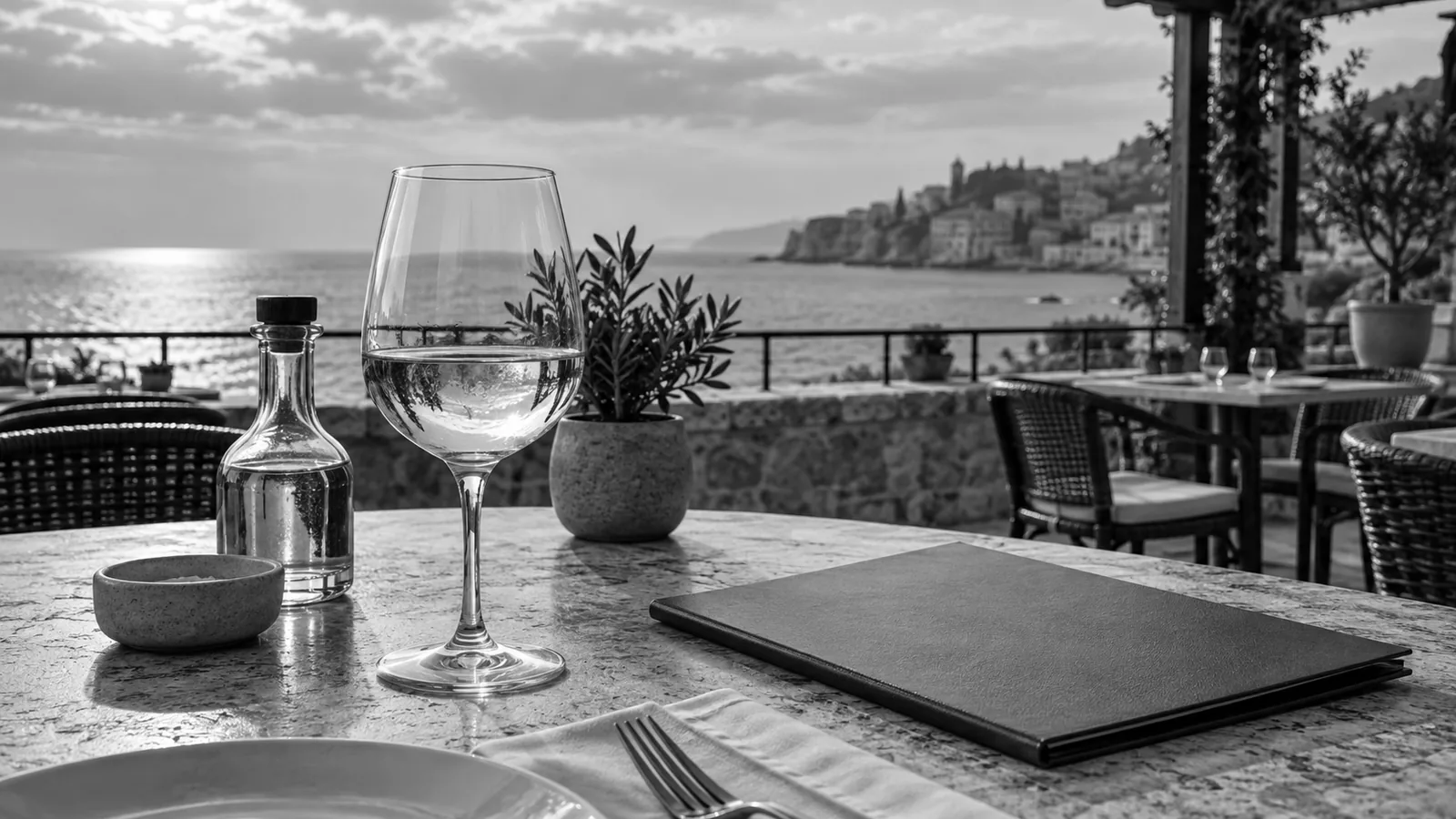
“Increasingly, people seek to support more wines from small ‘vignerons’ or environmentally respectful wines than wines of minimal intervention and maximum expression of Terroir.”
Álex Peiró, sommelier at Restaurante Casamar
Editorial note: an interview recovered from Winerim's archive, originally published on 18 March 2024. Roles, career history, relative dates, figures, recommendations and wine descriptions belong to that publication, not to a check of the current situation. Statements about Winerim are the interviewee's testimony at the time, not a guarantee of features or results.
Originally from Palafrugell, a charming town on the Costa Brava, Àlex Peiró has had restaurants in his blood since childhood: he was born into a family devoted to the restaurant world. His journey through wine and gastronomy began with firm steps and an insatiable thirst for knowledge. Today he is responsible for elevating diners' gastronomic experience through wine advice at Restaurante Casamar.
His early jobs took him to Drolma, where, under the guidance of Alfred Romagosa, he immersed himself in the details of dining-room service, learning that excellence lies in every gesture, every interaction with diners. It was a period of discovery in which every service became an opportunity to refine his work and enhance customers' experiences.
The next stop on his journey took him to Bodega de Can Roca, where he had the privilege of working alongside Josep Roca, an emblematic figure in the wine world. Here, in the shade of the vines and among the oak barrels, Álex absorbed more than technical knowledge: he learnt the humility required to truly understand and appreciate wine in its purest essence. Each bottle was a story, each variety a world to discover, and each customer an opportunity to share his passion with generosity and humility.
His journey culminated at the prestigious restaurant Moo, where the talented sommelier Roger Viusà introduced him to the fascinating universe of wine with infectious passion. Here, Àlex immersed himself in the complexity of vineyards, learning about different regions, varieties and winemaking techniques. Every tasting was a sensory journey, every bottle a window onto a new world of aromas and flavours.
Since 2007, Álex Peiró has been the star sommelier at the restaurant Casamar, where he creates unforgettable gastronomic experiences for diners. His commitment to excellence, humility and passion for wine show in every recommendation he makes and every glass he serves. For him, wine is not just a drink: it is a story to tell. And at Casamar, under his expert guidance, every dinner becomes a wine journey that delights the senses and nourishes the soul.
We have spoken with Álex to learn a little more about his career, his vision and his knowledge of the wine world. Today, in Winerim Academy: Álex Peiró, sommelier at Restaurante Casamar.
1. When did your interest in the world of wine begin?
Since childhood; my family has always been connected to hospitality.
2. What qualities should a good sommelier have?
A thorough knowledge of the wine world and, above all, plenty of empathy to know how to offer each diner the wine they will like most.
3. What is the most unusual place where you have organised or attended a wine tasting?
A few years ago we held a tasting on the restaurant terrace on a full-moon night, when Tom Mata from Recaredo “disgorged” a bottle of Turó d’en Mota for us.
4. What are the current trends in sommellerie?
I think there is a growing desire to support more wines from small “vignerons”, respectful of the environment, than wines of minimal intervention and maximum expression of Terroir.
Editorial note: the relationship between these ideas is ambiguous in the original wording of the headline and this answer. Its phrasing is retained without reinterpretation.
5. Tell us about your favourite wines: a white, a red, a rosé and a sparkling wine
- White: Valentia from Còsmic, a carinyena blanca from a small winery in Empordà.
- Red: Els Escurçons from Mas Martinet, a garnatxa from the highest vineyard on slate soil in Priorat.
- Rosé: Can Ràfols dels Caus, a merlot made by a visionary who left us very recently, Carlos Esteva. Intense, with plenty of character, and steering clear of the fashion for onion-skin rosés.
- Sparkling: Turó d’en Mota enoteca 1999. With 23 years of ageing with the yeasts, undoubtedly another dimension in our country's sparkling wines. As always, Recaredo goes a step further with long ageing.
- Fortified: Áureo 1954 from De Muller, for the bottled history of its soleras and its transmission of the culture of Mediterranean fortified wines, from Tarragona.
- Sweet: Bac de la Ginestera, from Vinya dels Aspres, a sweet garnatxa from Empordà that rests for 5 years “Sol i serena” in demijohns.
“Always make sure you taste the local wines of the place you visit”
6. What should someone with little experience of wine look for when choosing one to accompany their meal? In other words, what basic rules should a diner know to choose a good wine?
I think that, if we are not wine experts, the best thing is to seek advice from the professional at the restaurant or specialist shop. If that is not an option, the best thing is to know your preferences. Do I prefer whites or reds? Do I like more fruit, more body or lighter wines? Would I also consider the food and the weather? On a hot day, perhaps a sparkling wine or a white would go down well. And finally, depending on my preferences, I would try to identify which grapes or regions suit my favourite flavours.
7. Debunk a myth about wine and pairing it with food
One of the biggest myths: “white wine for fish and red for meat”.
Today we have many aged whites with years in the bottle that have the structure needed to pair with meat dishes, and lighter reds from cooler areas that give us more airy wines capable of accompanying fish dishes perfectly.
8. What requirements must a wine meet to be a good wine?
Giving pleasure, in other words, having no faults. Conveying the region it comes from, the grape type and the character of the person who makes it.
9. Steps we should follow to taste wine at an amateur level
First the visual stage: check that it is clear, look at the colour.
Then smell it and see what it conveys: intensity, types of fruit.
Then the taste: intensity, fluidity, texture.
10. The wine that has surprised you most recently
Turó d’en Mora enoteca 1999
Editorial note: the original writes “Turó d’en Mora” in this answer and “Turó d’en Mota” in answers 3 and 5. Both spellings are retained without standardising them.
11. The best value-for-money wine you have tasted
Vernatxa from Celler Frisach, a garnatxa blanca from Terra Alta.
“Winerim makes the wine list much more alive and up to date”
12. A traditional paper wine list or a digital wine list?
I have always preferred a paper list, because I am a bit of a romantic and because the digital ones I had seen did not convince me. But the truth is that, now I am working with Winerim, I am absolutely clear: digital.
13. How does Winerim help you in your work?
It lets me make changes very quickly, add and remove wines, update prices and vintages.
In short, it makes the wine list much more alive and up to date.
14. Finally, a piece of advice for any wine lover
Let the professionals at each restaurant or wine region you visit advise you.
Always make sure you taste the local wines.
Never lose your curiosity for tasting unfamiliar wines, and always keep your mind very open to new flavours and experiences.